Pantry Food Waste Reduction
Understanding Food Waste Statistics
The average American household throws away 40% of the food they purchase, resulting in an estimated 219 pounds of food waste per person per year, according to the United States Environmental Protection Agency (2022). The most commonly wasted foods include fruits and vegetables, with 30-40% of these items being discarded. This not only affects the environment but also has significant economic implications, with the average household losing around $1,500 per year due to food waste.
Pantry Purge and Categorization
To tackle food waste, start by clearing out your pantry. Here’s a step-by-step guide:
- Remove all items from your pantry and sort them into categories (e.g., grains, canned goods, baking supplies).
- Check expiration dates and dispose of any expired or spoiled items.
- Categorize and group similar items together, making it easier to see what you have and what you need. The National Foundation for Credit Counseling (2020) suggests implementing a ‘first-in, first-out’ policy to ensure older items are consumed before they expire.
Optimal Food Storage Methods
Proper food storage is crucial for maintaining freshness and reducing waste. Here are some practical tips:
- Store grains in airtight containers to keep them fresh for up to 6 months.
- Keep canned goods in a cool, dry place, and use them within 5-10 years of the expiration date.
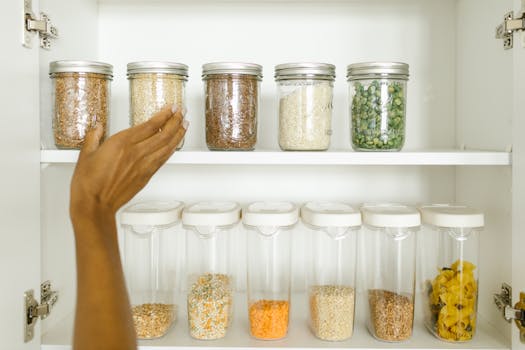
- Label and date all stored items so you can easily keep track of what you have and how long it’s been stored. The Academy of Nutrition and Dietetics (2021) recommends using clear, airtight containers for storing food to maintain freshness and visibility.
Meal Planning and Grocery List Strategies
Planning your meals around what’s already in your pantry can significantly reduce food waste. Here’s how:
- Take stock of what you already have in your pantry, fridge, and freezer.
- Plan meals around these items, making sure to include a variety of food groups.
- Make a grocery list based on what you need for your planned meals, avoiding impulse buys. The American Heart Association (2019) suggests planning your meals for the week, including breakfast, lunch, dinner, and snacks, to ensure you’re using up all the food you purchase.
Creative Uses for Common Pantry Items
Don’t let common pantry items go to waste. Here are some creative uses:
- Bread heels can be used to make croutons or bread pudding.
- Vegetable scraps can be used to make broth or stock.
- Leftover grains can be used to make fried rice or as a base for salads. The United States Department of Agriculture (2020) provides a wealth of information on creative ways to use up food scraps and reduce waste.
Maintaining the Pantry System
To keep your pantry organized and clutter-free, follow these tips:
- Schedule regular clean-outs every 3-6 months to get rid of expired or unused items.
- Implement a maintenance routine that includes checking expiration dates and restocking shelves. The National Association of Professional Organizers (2022) recommends setting aside time each week to maintain your pantry and prevent clutter from building up.
Comparison of Pantry Storage Solutions
| Storage Solution | Benefits | Drawbacks |
|---|---|---|
| Rubbermaid Configurations Pantry Storage Kit | Adjustable shelves, easy to assemble | Limited customization options |
| Seville Classics UltraHD Pantry | Durable, spacious | Expensive, difficult to assemble |
Frequently Asked Questions
How much food waste can be reduced through pantry organization?
Reducing food waste through pantry organization can save the average household around $1,500 per year. By implementing a well-organized pantry system, you can significantly reduce the amount of food that goes to waste.
What are the most commonly wasted foods?
The most commonly wasted foods include fruits and vegetables, with 30-40% of these items being discarded. Proper storage and meal planning can help reduce this waste.
How often should I clean out my pantry?
It’s recommended to schedule regular clean-outs every 3-6 months to get rid of expired or unused items and maintain a clutter-free pantry.
What are some creative ways to use up food scraps?
Creative ways to use up food scraps include making croutons from bread heels, broth from vegetable scraps, and fried rice from leftover grains.
How can I maintain my pantry system over time?
To maintain your pantry system, implement a maintenance routine that includes checking expiration dates, restocking shelves, and scheduling regular clean-outs.
What are the benefits of using a pantry storage kit?
The benefits of using a pantry storage kit include adjustable shelves, easy assembly, and a clutter-free pantry. Consider using the Rubbermaid Configurations Pantry Storage Kit for your pantry organization needs.
My Take
As an app developer and professional chef, I’ve seen firsthand the impact of food waste on our environment and our wallets. By implementing a well-organized pantry system and following the tips outlined above, you can significantly reduce your food waste and make a positive impact on the environment. I’ve found that using a pantry storage kit, such as the Rubbermaid Configurations Pantry Storage Kit, can make a big difference in keeping your pantry clutter-free and organized.
In my own kitchen, I’ve implemented a ‘first-in, first-out’ policy and make sure to plan my meals around what’s already in my pantry. I’ve also found creative ways to use up food scraps, such as making croutons from bread heels and broth from vegetable scraps. By following these tips and maintaining a well-organized pantry, you can reduce your food waste and make a positive impact on the environment.
You might also like
- Humidity control without a dehumidifier
- Best Amazon Closet Shelf Dividers
- Tiny Home Office Organization with Shelves and Drawers
- best sous vide accessories for precise cooking
Practical Summary
Here are some concrete actions you can take to reduce food waste through pantry organization:
- Implement a ‘first-in, first-out’ policy to ensure older items are consumed before they expire
- Plan your meals around what’s already in your pantry to reduce impulse buys and waste
- Use a pantry storage kit, such as the Rubbermaid Configurations Pantry Storage Kit, to keep your pantry clutter-free and organized
- Schedule regular clean-outs every 3-6 months to get rid of expired or unused items
- Find creative ways to use up food scraps, such as making croutons from bread heels and broth from vegetable scraps
- Maintain your pantry system over time by checking expiration dates, restocking shelves, and scheduling regular clean-outs
- Consider using complementary products, such as OXO Good Grips Pop Container, to enhance your pantry organization
Written by Vladys Z. — App developer and professional chef. Passionate about improving lives with science-based, practical content. Follow me on YouTube.
Sources
- United States Environmental Protection Agency (2022). Food Waste.
- National Foundation for Credit Counseling (2020). Food Budgeting.
- Academy of Nutrition and Dietetics (2021). Food Storage.
- American Heart Association (2019). Meal Planning.
- United States Department of Agriculture (2020). Food Waste Reduction.
- National Association of Professional Organizers (2022). Pantry Organization.
Related articles

Maximizing Laundry Room Space
Discover how to optimize your laundry room with minimalist organization methods and essential Amazon products.
Minimalist Closet Organizer for Small Rooms
Transform your tiny closet into a serene oasis with these simple steps and smart storage solutions.

Simple Home Filing System for Paper Clutter Reduction
Get organized in 5 minutes a day with this simple filing system for paper clutter