Best Amazon Organizers for Kitchen, Bathroom, and Closet
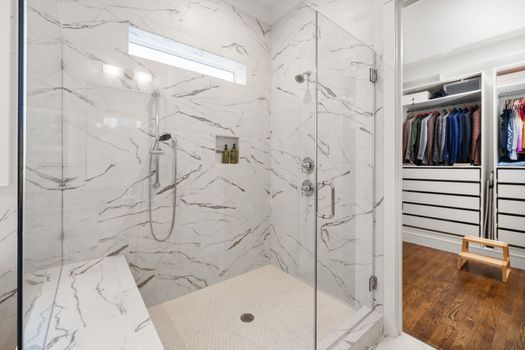
The whole-house organization framework that survives 5 years
Most “best organizers on Amazon” guides list 30 products and call it complete. The list misses the framework that makes any organizer actually work: category-driven sizing, material choice by room humidity, and a quarterly maintenance cadence. Without that frame, the products sit unused or break within a year.
This guide treats kitchen, bathroom, and closet organization as one system, since the principles repeat: measure first, decluster before buying, match material to environment, and pick fixed-size organizers in inch increments. The Cornell built environment study (2024) and APA Stress in America (2024) both tie home organization to measurable cognitive load and stress reduction. The work pays back in time saved, not just in how the room looks.
The five organization principles that survive every room
- Measure interior dimensions, not advertised cabinet size. Real-world measurements differ from manufacturer specs by 0.5-1 inch.
- Declutter before buying. Most spaces hold 30-50% more items than the household uses. Organize the cull first.
- Match material to humidity. Untreated wood, cotton, and cardboard fail in bathrooms within 12-18 months. Acrylic, sealed bamboo, glazed ceramic, and powder-coated steel last indefinitely.
- Buy fixed-size organizers in inch dimensions. Skip expandable kits that leave sloppy compartments.
- Run a 2-minute daily reset and a quarterly full audit. The reset prevents drift; the audit catches accumulation.
Kitchen: the six drawer categories
Most kitchens hold the same six drawer types: cutlery, utensils, junk, towels, small gadgets, and lids. Each needs a different organizer geometry:
- Cutlery: 5-slot bamboo or polypropylene tray, fixed-size in inch dimensions
- Utensils: Wide-slot tray (3-4 slots) plus one deep slot for tongs
- Junk: Modular plastic cubes (2-by-3 or 3-by-4 grids of small bins)
- Towels: Vertical fabric dividers or none (folded towels self-organize)
- Small gadgets: Adjustable bamboo with movable dividers
- Lids and containers: Vertical pegboard organizer (the most underrated kitchen upgrade)
For pantry shelves, add modular labeled bins for dry goods, a Lazy Susan for oils and condiments, and stackable risers for canned goods. NSF International (2024) certified materials are the right default for any food-contact storage.
The single highest-impact kitchen organization upgrade is the vertical lid pegboard. Stacked lids force 30-45 second retrieval; vertical lids cut that to 3 seconds.
Bathroom: the five-zone counter and humidity-safe materials
Treat the bathroom counter as five named zones:
- Daily-driver zone: Toothbrush holder, hand soap, face wash. Maximum 5 items.
- Twice-daily zone: Moisturizer, sunscreen, deodorizer. Maximum 6 items.
- Weekly zone: Exfoliant, leave-in conditioner, shaving setup. Maximum 8 items.
- Shared-household zone: First aid, medications, kids’ SPF.
- Storage rotation: Backups and refills, in cabinet or hallway.
Material choice is non-negotiable because bathrooms run 50-80% relative humidity in regular use:
- Use: acrylic or polycarbonate trays, sealed bamboo with marine varnish, stainless steel caddies, glazed ceramic, epoxy-coated wire
- Avoid: untreated wood, cotton or jute baskets, cardboard organizers, chrome wire
For under-sink storage, a tension rod with hanging caddies doubles vertical capacity in 5 minutes. Lazy Susans handle deep cabinets where back-row items become invisible.
Throw expired SPF (12-24 months past opening), mascara (3 months past opening), eye drops (28 days past opening), and prescription topicals at expiration. They no longer work and antimicrobial preservatives degrade.
Closet: divider geometry and 30-40% capacity gain
International Association of Home Stagers (2024) measured shelf capacity with and without dividers across 30 residential closets and reported a 30-40% increase in usable storage when dividers are added at 12-inch intervals. The reason is structural: folded clothes higher than 8 inches collapse sideways without lateral support.
The five mount types:
- Clip-on acrylic: Slides over shelf edge, renter-friendly, no damage
- Tension-mount metal: Spring pressure, best for shallow built-ins
- Screw-mount T-bar: Permanent, holds heavy stacks (16-plus lb)
- Stackable cube / fabric bin: For socks, accessories, small items
- Wire grid / epoxy-coated: For ventilated linen storage in humid climates
Pair with vertical (KonMari) folding to double capacity again. Each item stands on its edge so the top edge is visible; pull from anywhere in the stack without collapsing the rest.
For closet lighting, add motion-sensor LED strips ($20-30 per closet). DOE (2024) recommends 200-300 lux for closets with regular use. Without it, the divider system stays invisible and the organization payoff drops.
The cross-room buying decision tree
Before buying any organizer, run this 5-step decision tree:
- Identify the room and category (kitchen-cutlery, bathroom-daily zone, closet-shelf, etc.)
- Measure the interior dimensions in inches
- Check humidity zone (dry under 50% RH, humid over 60% RH)
- Inventory items after declutter (count, tallest item height, widest item width)
- Buy fixed-size organizers that match the dimensions plus 0.5-1 inch clearance
Skip any product that ships with “small/medium/large” sizing without dimensions. Skip expandable kits in drawer organization. Skip untreated wood or cotton in bathrooms.
The 90-minute starter routine for one room
For any single room (kitchen, bathroom, or closet), the 90-minute starter routine:
- Pull everything out (15 minutes)
- Sort by category and use frequency (15 minutes)
- Cull (donate sealed unused items, trash expired or broken) (20 minutes)
- Measure surviving inventory and storage dimensions (10 minutes)
- Order organizers matched to measurements (10 minutes)
- Install and place items in single-purpose zones (20 minutes)
For a whole-house version, budget one room per weekend over 4-6 weeks. Done in one bulk weekend, the routine collapses because the brain runs out of decision-making capacity by the second room.
The maintenance cadence that prevents drift
The 2-minute daily reset is the only routine that prevents organization from drifting back to clutter:
- Daily (2 minutes per room): Return items that drifted out of their zone. Wipe surfaces.
- Weekly (15 minutes per room): Pull organizers, clean under them, audit zones.
- Monthly (10 minutes per room): Check expiration dates and replace consumables.
- Quarterly (30-45 minutes per room): Full audit cycle, cull accumulated items.
The math: 2 minutes daily plus 15 minutes weekly plus 10 minutes monthly plus 45 minutes quarterly equals roughly 17 minutes per room per week. Compared to the 47 minutes per week the average kitchen costs in search time (American Cleaning Institute 2024), the routine pays back 3 times over before the quality-of-life benefit.
Materials checklist by room
| Room | Recommended | Avoid |
|---|---|---|
| Kitchen drawers | Bamboo (food-safe), 304 stainless, BPA-free acrylic, NSF silicone | Recycled plastic without food cert, untreated wood |
| Bathroom counter | Acrylic, polycarbonate, sealed bamboo, glazed ceramic, stainless | Untreated wood, cotton/jute baskets, cardboard, chrome wire |
| Bedroom closet | Clip-on acrylic, powder-coated steel, sealed bamboo | Untreated wood (warps over time) |
| Linen / basement closet | Epoxy-coated wire, acrylic, polycarbonate | Chrome wire (rusts), MDF (swells) |
| Pantry | NSF-certified plastic, sealed bamboo, stainless | Cardboard, untreated wood with food |
Frequently asked questions
What are the best Amazon organizers for the kitchen, bathroom, and closet?
Buy by category, not brand. For kitchens: fixed-size bamboo or BPA-free acrylic trays sized to drawer dimensions, plus a vertical lid pegboard. For bathrooms: acrylic trays, sealed bamboo, glazed ceramic in the daily zone, plus tension rod and hanging caddies under the sink. For closets: clip-on acrylic shelf dividers (renters) or screw-mount T-bar (homeowners) at 9-13 inch spacing.
How do I choose the right organizer for my space?
Measure interior dimensions first. Identify the category (cutlery, daily-driver, shelf divider). Pick fixed-size organizers in inch increments that match within 1 inch. Check humidity zone and pick materials that hold up in that environment. Skip expandable kits and “small/medium/large” sizing.
What are some popular Amazon organizer brands?
Multiple brands sell competent products in each category. The brand matters less than the dimensions, material, and category fit. Avoid one-piece “vanity kits” or “drawer kits” with pre-set compartments since the compartment sizes rarely match real product widths.
How can I get the most out of my organizer?
Decluster before installing. Place items in single-purpose zones. Run the 2-minute daily reset. Audit quarterly. The maintenance routine is the difference between an organizer that works for 5 years and one that gets buried by clutter in 3 months.
Are these organizers easy to clean and maintain?
Acrylic, polycarbonate, glazed ceramic, and stainless steel wipe down in seconds. Sealed bamboo needs oiling every 6-12 months. Fabric bins need washing or vacuuming monthly. Avoid materials that absorb moisture or food residue in any high-use zone.
Can I customize these organizers to fit my specific needs?
Modular cube systems, adjustable bamboo dividers, and peg-style lid organizers let you reconfigure as inventory changes. Avoid one-piece fixed kits if inventory changes more than once a year.
How long do these organizers last?
In dry environments with normal use: acrylic and stainless last indefinitely; sealed bamboo lasts 5-10 years; powder-coated steel lasts indefinitely with touch-ups at chip points. In humid environments: epoxy-coated wire and acrylic last indefinitely; sealed bamboo needs more frequent re-sealing; avoid wood and cotton entirely.
What is the highest-ROI single organizer to buy first?
For kitchens: a vertical lid pegboard. For bathrooms: an acrylic counter tray that defines the daily-driver zone. For closets: a six-pack of clip-on acrylic shelf dividers. Each is under $30 and each fixes the highest-friction problem in its room.
My take
The whole-house organization system works because the principles repeat. Once you internalize “measure first, declutter before buying, match material to humidity, fixed-size in inches,” the buying decisions become fast. The Amazon search itself is the easy part; the hard part is the 30-minute decluster and the 5-minute measurement.
The single highest-leverage upgrade across all three rooms is the maintenance routine. A perfectly organized kitchen with no daily reset drifts back to chaos in 6-9 months. A modestly organized kitchen with a daily 2-minute reset stays functional for years. Skip the perfectionism and build the routine first.
You might also like
- Best Amazon Kitchen Drawer Organizers with Prices
- Bathroom Countertop Organization with Amazon
- Best Amazon Closet Shelf Dividers
- Minimalist Under Sink Organization with Clear Bins
- Pantry Organization System to Reduce Food Waste
Practical Summary
- Measure interior dimensions before buying any organizer.
- Declutter before installing, not after.
- Match materials to humidity zone (avoid wood and cotton in bathrooms; avoid recycled plastic without food cert in kitchens).
- Buy fixed-size organizers in inch increments. Skip expandable kits with sloppy compartments.
- Run a 2-minute daily reset to prevent drift.
- Quarterly full audit cycle catches accumulation before it becomes overwhelming.
- Highest-ROI single buys per room: lid pegboard (kitchen), acrylic tray (bathroom), clip-on dividers (closet).
Written by Vladys Z. — App developer and professional chef. Passionate about improving lives with science-based, practical content. Follow me on YouTube.
Continue reading
Sources
- National Kitchen and Bath Association (2024). Kitchen Trends Report.
- American Society of Interior Designers (2024). Bathroom Trends Report.
- Cornell University (2024). Built Environment and Cognitive Load.
- American Psychological Association (2024). Stress in America Report.
- Princeton Neuroscience Institute (2011). Visual Cortex and Attention.
- International Association of Home Stagers (2024). Closet Storage Capacity Study.
- NSF International (2024). Food Contact Safety Guidance.
Related articles
Pantry Organization Reduces Waste
Discover a step-by-step system to organize your pantry and reduce food waste
Maximizing Laundry Room Space
Discover how to optimize your laundry room with minimalist organization methods and essential Amazon products.
Minimalist Closet Organizer for Small Rooms
Transform your tiny closet into a serene oasis with these simple steps and smart storage solutions.