Bathroom Countertop Organization with Amazon
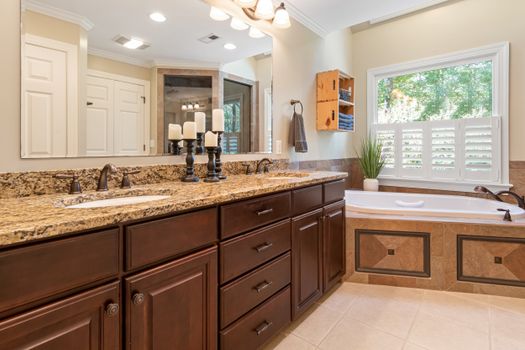
The 23 products on your counter that cost you 11 minutes a day
The average US bathroom counter holds 23 personal care products at any time (American Cleaning Institute 2024), and 11 of them have not been used in 90 days. That is not just an aesthetics problem. It is slow, daily friction. Every morning routine includes locating a toothbrush in a sea of dropper bottles, an exfoliating cream you bought once, and three near-empty shampoo samples.
Princeton Neuroscience Institute (2011) measured visual cortex load and found that multiple objects in a field of view compete for attention, slowing task completion 11-17% even when the objects are unrelated to the task. UC Irvine (2011) tied chronic clutter to elevated cortisol levels in resident women, a finding the APA Stress in America 2024 report still cites.
This guide treats the bathroom counter as a workstation. The goal is a setup where every product you reach for is the one you actually use, sorted by frequency, with a permanent home that survives cleaning days and travel kits. Five categories, six container types, one weekly reset routine.
Why bathroom clutter wears you down
Clutter is a low-grade stressor. The mechanism is well-documented in environmental psychology:
- Visual attention competition: The brain processes every object in your visual field whether you want it to or not (Princeton 2011).
- Decision fatigue: Choosing among 23 products burns the same executive function budget you need for the rest of the day (Roy Baumeister’s foundational work, replicated by Cornell 2024).
- Cortisol elevation: UC Irvine found a measurable increase in salivary cortisol in women who described their homes as cluttered.
- Sleep disruption: APA 2024 reports correlation between bedroom and bathroom clutter and reduced sleep quality scores.
The fix is structural, not motivational. A counter that supports a 2-minute morning reset stays clean. A counter that requires 15 minutes of sorting on Sunday fails by Wednesday.
The five-zone counter layout
Treat the counter as five named zones. Every product has to fit one.
- Daily-driver zone (within arm’s reach of the sink): Toothbrush holder, toothpaste, hand soap dispenser, face wash. Maximum 5 items.
- Twice-daily zone (corner closest to your reflection): Moisturizer, sunscreen, deodorant, hair product. Maximum 6 items.
- Weekly zone (back wall or vanity tray): Exfoliant, face mask, leave-in conditioner, beard or shaving setup. Maximum 8 items.
- Shared-household zone (drawer or under-sink): Items used by more than one person but not daily (first aid, medications, sunscreen for kids).
- Storage rotation (under-sink, closet, or hallway): Backups, refills, travel sizes.
Items that do not fit one of these zones get donated, returned, or trashed. The hardest rule: products you bought once, used once, and have not touched in 90 days go in the donate or trash pile. They will not get used. They are taking up the field of view that costs you cognitive load every morning.
The six container types that actually work
Most bathroom organization gear is decorative trash. These six categories cover virtually every real use case:
- Acrylic or bamboo tray (12-18 inches): Defines the daily-driver zone. Wipes down in one second. Stops liquid product rings on the counter surface.
- Three-compartment caddy with handle: Portable for cleaning days. Holds the twice-daily zone vertically without taking horizontal space.
- Lazy Susan turntable (10-12 inch): Spins, accesses back-row items without rearranging. Works in deep cabinets and on counters.
- Stackable clear drawer organizers: For inside vanity drawers. Sized in inches, not “small/medium/large.” Measure first, buy second.
- Wall-mounted toothbrush holder with UV sanitizer (optional): Removes the cup-of-water on the counter that grows bacteria.
- Under-sink tension rod plus hanging caddies: Doubles vertical storage in 5 minutes. Better than stacked plastic bins because it uses dead vertical space.
What does not work consistently: woven baskets in humid bathrooms (mildew within 6 months), single-purpose dispensers (toothbrush sanitizers that only fit one brand of brush), and “vanity organizers” with built-in dividers that do not match your product sizes.
The 30-minute initial declutter
Block 30 minutes. Pull everything off the counter and out of the top vanity drawer. Sort into four piles:
- Keep, daily: Used in the last 7 days. Goes to zones 1 and 2.
- Keep, weekly or backup: Used in the last 90 days. Goes to zone 3 or storage rotation.
- Donate: Unopened or barely used products you will not finish. Local women’s shelters, homeless services, and Buy Nothing groups take these. Some products (cosmetics, opened skincare) are not accepted; check first.
- Trash: Expired SPF (loses efficacy after 12-24 months past opening), dried-out makeup, broken tools.
Critical edge case on expiration: Sunscreens, prescription topicals, and contact lens solution have hard expiration dates and lose efficacy or become contaminated past those dates. Mascara is 3 months from opening. Liquid eyeliner is 6 months. Eye drops are 28 days after opening. Throw expired versions. They do not work and the antimicrobial preservatives degrade.
The maintenance routine: 2 minutes a day, 15 minutes a week
- Daily (2 minutes): Return any item that left its zone. Wipe the daily-driver tray. Empty the trash if needed.
- Weekly (15 minutes): Pull the tray, clean under it. Wipe the back wall. Refill soap dispenser. Audit zone 1 and 2 for products that drifted in from elsewhere.
- Monthly (10 minutes): Check expiration dates on the products in zone 3. Rotate backups from storage if a daily item is running low.
- Quarterly (30 minutes): Full declutter cycle. Run the four-pile sort again. Most households accumulate 4-6 new bottles per quarter that need to be sorted in or out.
The routine works because no single step takes more than 15 minutes. The daily 2-minute reset is what prevents the counter from drifting back to 23 items.
Material choices that survive humidity
Bathrooms run 50-80% relative humidity for parts of every day. This rules out:
- Untreated wood (warps and grows mildew in 6-18 months)
- Cotton or jute woven baskets (mildew at the contact points)
- Cardboard organizers (collapse and grow mold)
- Powder-coated metal in shower zone (chips at contact points, rusts)
Materials that hold up over 5-plus years in bathroom humidity:
- Acrylic or polycarbonate (clear or frosted)
- Stainless steel (304 grade or higher for fasteners)
- Sealed bamboo (with marine varnish or polyurethane, replaced every 2-3 years)
- Glazed ceramic
- Powder-coated steel for non-shower zones (toothbrush holders, soap dispensers on counters)
The acrylic tray plus stainless caddy plus glazed ceramic dispenser combination survives indefinitely with weekly wiping.
The decision tree for which container to buy
Buying organization gear without measuring first wastes money. Use this decision tree:
- Measure your counter depth and width (most US bathroom counters are 21-22 inches deep, 36-72 inches wide).
- Measure the height clearance between counter and bottom of cabinet or mirror.
- Inventory the products that survived the declutter. Note the tallest item (usually a hairspray or styling product, 9-11 inches).
- Pick a tray sized 12-18 inches for the daily zone.
- Pick a caddy 8-12 inches tall that fits your tallest product.
- Buy clear stackable drawer organizers in 2-inch height increments. They have to fit the drawer height and the product height.
The most common mistake is buying a “vanity organizer kit” with pre-set dividers. The dividers never match real product dimensions, leaving wasted space and forcing products to lie on their sides.
Real-world setups for three counter sizes
- Small counter (under 36 inches): One 12-inch tray for daily zone. One Lazy Susan in the under-sink cabinet. Wall-mounted toothbrush holder removes one footprint item from the counter entirely.
- Medium counter (36-60 inches): 16-inch tray for daily zone. Three-compartment caddy on the back wall for twice-daily zone. Under-sink hanging caddy for cleaning supplies.
- Large counter (60-plus inches with double sinks): One tray per sink. Shared vanity tray in the center for the twice-daily zone. Wall-mounted shelves above each mirror for backup storage.
For shared bathrooms (multiple users), label drawers or zones with vinyl tape labels. Disputes about whose stuff is where consume more cognitive load than the original clutter did.
Frequently asked questions
How do I keep my bathroom countertop organized day to day?
The five-zone layout plus a 2-minute daily reset is the working setup. Pull anything that drifted out of its zone back into place. Wipe the daily-driver tray. The 2-minute investment prevents the 15-minute weekend cleanup.
What are common mistakes when organizing a bathroom countertop?
Buying organizers before decluttering, using untreated wood or cotton in a humid bathroom, accepting “vanity kits” with pre-set dividers that do not match your products, and not enforcing the 90-day donation rule on unused products.
How can I add storage without rebuilding the bathroom?
Wall-mounted shelves above the mirror, over-the-toilet shelf units, under-sink tension rods with hanging caddies, and the back of the door for hooks or pocket organizers. These add 30-50% storage capacity without changing the cabinet footprint.
What products should I prioritize donating versus trashing?
Trash anything past expiration (SPF, mascara 3 months past opening, prescription topicals, eye drops 28 days past opening). Donate sealed or barely used products to women’s shelters or homeless services. Check local rules first since cosmetics policies vary.
Are there safety concerns with bathroom organization choices?
Yes. Keep all medications, mouthwash, and razor blades in a locked drawer or upper cabinet if you have small children. The CDC reports several thousand emergency room visits per year from kids ingesting personal care products. Never store cleaning products under the bathroom sink if it shares space with kid-accessible items.
How often should I do a full declutter cycle?
Quarterly is the working cadence. Most households accumulate 4-6 new bottles per quarter from purchases, gifts, and samples. Without a quarterly reset, the counter drifts back to baseline clutter in 6-9 months.
What about UV sanitizing toothbrush holders?
They work for surface bacteria reduction (lab studies show 99% kill at 254 nm UV-C wavelength). They do not justify the price for healthy households. They do help in households with recurring strep, GI bugs, or immunocompromised members. The marginal hygiene benefit for everyone else is small.
My take
The five-zone layout sounds rigid until you live with it for two weeks. Then it becomes invisible. The brain stops scanning the counter for the toothpaste because the toothpaste is always in zone 1. The 11 minutes of daily friction quietly disappears.
The single best ROI investment is the acrylic tray. Under $20, lasts a decade, defines the working zone, and protects the counter from product rings. Skip the Pinterest-worthy bamboo trays for humid bathrooms. They look great for a year and grow mildew on year two.
You might also like
- Minimalist Under Sink Organization with Clear Bins
- Best Amazon Closet Shelf Dividers
- Minimalist Entryway Organization with Baskets and Shelves
- Tiny Home Office Organization with Shelves and Drawers
- Minimalist Desk Organization for Small Spaces
Practical Summary
- Audit and declutter before buying any organization gear.
- Apply the five-zone layout: daily, twice-daily, weekly, shared, storage rotation.
- Use acrylic, stainless, sealed bamboo, or glazed ceramic. Avoid wood, cotton, cardboard in humid bathrooms.
- Run a 2-minute daily reset to prevent drift back to clutter.
- Quarterly full declutter cycle to handle the 4-6 new products that arrive per quarter.
- Enforce the 90-day donation rule on unused products.
- Throw expired SPF, mascara (3 months), eye drops (28 days). They do not work.
Written by Vladys Z. — App developer and professional chef. Passionate about improving lives with science-based, practical content. Follow me on YouTube.
Continue reading
Sources
- University of California, Irvine (2011). Cluttered Spaces, Cluttered Minds.
- American Psychological Association (2024). Stress in America Report.
- Journal of Environmental Psychology (2019). The Impact of Clutter on Cognitive Function.
- American Cleaning Institute (2024). Bathroom Habits Survey.
- Cornell University (2024). Built Environment and Cognitive Load.
- Princeton Neuroscience Institute (2011). The Interactive Effects of Visual Cortex.
Related articles
Pantry Organization Reduces Waste
Discover a step-by-step system to organize your pantry and reduce food waste
Maximizing Laundry Room Space
Discover how to optimize your laundry room with minimalist organization methods and essential Amazon products.
Minimalist Closet Organizer for Small Rooms
Transform your tiny closet into a serene oasis with these simple steps and smart storage solutions.