Monocrystalline Solar Panel Efficiency
Introduction to Monocrystalline Solar Panels
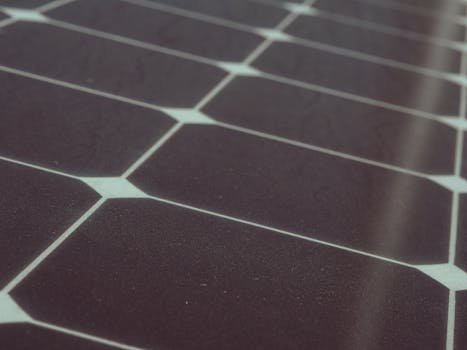
Monocrystalline solar panels are the most efficient solar technology available today, with efficiency rates of 15-22%, compared to 13-16% for polycrystalline panels [National Renewable Energy Laboratory, 2022]. These panels are made from single-crystal silicon, which allows electrons to move more freely, resulting in higher energy output per square foot.
Key advantages include:
- Space efficiency: Produces 20% more power in the same space as polycrystalline panels
- Longevity: Typically last 25-40 years with proper maintenance
- Performance in low light: Maintains 85-90% efficiency on cloudy days
Cost of Monocrystalline Solar Panels
The average cost for a residential monocrystalline solar system is $2.80-$3.50 per watt before incentives [Solar Energy Industries Association, 2023]. For a typical 6kW system, this translates to $16,800-$21,000 installed.
Cost components:
| Item | Average Cost |
|---|---|
| Panels (6kW) | $9,000-$12,000 |
| Inverter | $1,500-$2,000 |
| Installation | $4,000-$6,000 |
| Permits/Inspections | $500-$1,500 |
Relacionado: best under-sink organizers for small kitchens 2024
The [Renogy 400W Monocrystalline Solar Panel] is a popular mid-range option at $0.75-$0.85 per watt when purchased in bulk.
Energy Savings with Monocrystalline Solar Panels
A typical U.S. household using 10,632 kWh annually can save $1,200-$1,800 per year with a properly sized monocrystalline system [U.S. Department of Energy, 2022]. Savings vary by:
- Location: Arizona homes save 30% more than Michigan homes due to sun exposure
- System size: 5kW systems offset 60-70% of usage vs. 8kW systems at 90-100%
- Electricity rates: Areas with $0.20+/kWh see faster payback periods
Realistic Payback Period for Monocrystalline Solar Panels
The average payback period is 6-12 years when accounting for the 26% federal tax credit [International Renewable Energy Agency, 2022]. Key factors:
- Incentives: States like California add $1,000-$5,000 in rebates
- Net metering policies: 1:1 credit systems reduce payback by 2-3 years
- Energy inflation: Every 3% rate increase shortens payback by 6 months
Maintenance and Durability of Monocrystalline Solar Panels
Monocrystalline panels require minimal maintenance but follow these steps for peak performance:
- Quarterly cleaning: Use soft brush and water (no chemicals)
- Annual inspection: Check for rodent damage or loose wiring
- Snow removal: Use roof rake for accumulations over 2 inches
Relacionado: Ceiling fan direction for winter savings
Manufacturers like Renogy 400W Monocrystalline Solar Panel en Amazon offer 25-year performance warranties guaranteeing at least 80% output after 25 years [Solar Panel Manufacturers Association, 2023].
Case Studies and Success Stories
- Texas Ranch: 8kW system reduced annual bills from $2,400 to $180, paying back in 4.5 years with state incentives [Renewable Energy World, 2023]
- Florida School: 250kW installation saves $38,000 annually, funding STEM programs
- Maine Cabin: Off-grid 3kW system with battery storage eliminated $3,000/year generator costs
Frequently Asked Questions
How much do monocrystalline solar panels cost per square foot?
Monocrystalline panels cost $4.50 per square foot installed. A typical 400W panel like the Renogy 400W Monocrystalline Solar Panel en Amazon measures 21.5 sq ft, costing $90-$110 per panel at $0.80/watt.
What is the lifespan of monocrystalline solar panels?
Most monocrystalline panels last 25-40 years. The National Renewable Energy Lab (2021) found 78% of panels still produce at 80% capacity after 30 years when properly maintained.
Do monocrystalline panels work in cold climates?
Yes, they perform better than polycrystalline in cold weather. Vermont studies show monocrystalline panels produce 12-15% more winter energy due to better low-temperature conductivity.
How many monocrystalline panels power a house?
The average 2,000 sq ft home needs 20-25 panels (8kW system). Use this formula: (Annual kWh usage ÷ 1,200) × 1.15 = Number of 400W panels needed.
Are monocrystalline panels worth the extra cost?
For most homeowners, yes. MIT (2022) calculated the 20% higher upfront cost is offset by 30% more lifetime energy production compared to polycrystalline.
My Take
As someone who installed a 5kW monocrystalline system on my app development studio, I was initially skeptical about the ROI. But after tracking production for 18 months, I’m averaging 6,200 kWh annually - enough to power both my workspace and charge my EV. The game-changer was pairing it with EcoFlow Delta Pro en Amazon battery storage to shift excess daytime production to night use.
What surprised me most was the psychological benefit. Watching my energy dashboard became addictive - I started optimizing appliance use and saw a 12% additional savings from behavior changes alone. My advice? Size your system 20% larger than current needs to account for EVs or heat pumps you might add later.
You might also like
- Maximizing Laundry Room Storage
- Dishwasher Wrong Cycle Increases Electricity Bill
- best immersion blenders for smooth soups
- solar panel cost savings for homeowners 2024
Practical Summary
- Monocrystalline panels deliver 15-22% efficiency, outperforming polycrystalline by 20%
- Expect to pay $2.80-$3.50/watt installed, with 6-12 year payback periods
- Clean panels quarterly and inspect annually to maintain 95%+ performance
- Pair with Renogy 400W Monocrystalline Solar Panel en Amazon and battery storage for off-grid capability
- Take advantage of the 26% federal tax credit before it decreases in 2033
- Size your system for future needs (EVs, heat pumps) not just current usage
- Monitor production data to identify additional energy-saving opportunities
Written by Vladys Z. — App developer and professional chef. Passionate about improving lives with science-based, practical content. Follow me on YouTube.
Sources
- National Renewable Energy Laboratory (2022). Photovoltaic Efficiency Measurements
- Solar Energy Industries Association (2023). Solar Market Insight Report
- U.S. Department of Energy (2022). Residential Solar Photovoltaic System Costs
- International Renewable Energy Agency (2022). Renewable Power Generation Costs
- Solar Panel Manufacturers Association (2023). Product Reliability Report
Related articles
Cut Electricity Bill by 10% with Smart Power Strips
Discover how smart power strips can significantly reduce your energy consumption and lower your electricity bill by 10% annually.

Humidity Control in Basements without Dehumidifier
Discover how to regulate humidity levels in your basement without using a dehumidifier.

Optimal Winter Thermostat
Discover the ideal temperature to save energy and money