Best Amazon Closet Shelf Dividers

The shelf divider math: 30-40% more storage in the same footprint
Closet shelf dividers convert one wide, unstable stack of folded clothes into 3-4 narrow stacks that hold their shape. The International Association of Home Stagers (2024) measured shelf capacity with and without dividers across 30 residential closets and reported a 30-40% increase in usable storage when dividers are added at 12-inch intervals.
The reason is structural. A pile of T-shirts folded to 10 inches wide collapses sideways at 8-9 inches of stack height. The same shirts in a narrow column (8 inches wide) bounded by two dividers stay vertical to 14-16 inches. You get more height per stack, and you stop the avalanche when you pull a shirt from the middle.
This guide treats shelf dividers as a structural choice, not a decorative one. Material, mount type, and shelf material decide whether the dividers actually work or just look organized for a week.
When shelf dividers are the right fix and when they are not
Dividers solve specific problems:
- Wide shelves (over 18 inches deep) where folded stacks collapse
- Open shelving in closets, pantries, and linen storage
- Shelves shared by multiple stack types (sweaters and jeans, towels and sheets)
- Tall stacks that need vertical reinforcement
Dividers do not solve:
- Hanging clothes (use cascading hangers or rod organizers)
- Small items (use drawer organizers or fabric bins instead)
- Shoes (use shoe racks or stackable shoe boxes)
- Books (use bookends; dividers are too short)
The most common buying mistake is using dividers on shelves that are too shallow (under 14 inches) where there is not enough horizontal space for a divider plus a meaningful stack on each side.
The five divider types worth knowing
- Clip-on acrylic dividers: Slide onto the shelf edge. No tools, no damage. Best for wood shelves under 1 inch thick. Hold 8-12 lb of leaning weight.
- Tension-mount metal dividers: Use spring tension between two divider walls. Best for built-in closets with adjacent vertical surfaces.
- Screw-mount T-bar dividers: Permanent install with 2 screws per divider. Best for high-traffic shelves and stacks over 15 lb. Damage on uninstall.
- Stackable cube dividers (fabric bin or drawer-style): Convert open shelf to compartmentalized box storage. Best for socks, accessories, small items.
- Wire grid dividers: Mesh metal panels that interlock. Best for ventilated storage (towels, sheets in humid climates) and lightweight items.
The clip-on and screw-mount types cover 90% of residential use cases. Tension-mount works well in narrow vertical spaces. Wire grid is undervalued for linen closets where ventilation matters.
Material durability by humidity zone
Closets are not all the same environment. Bedroom closets run drier (35-50% RH). Bathroom-adjacent closets and basement storage run wetter (50-75% RH). Material choice matters:
- Acrylic and polycarbonate: Indifferent to humidity. Crack if dropped from height or over-tightened.
- Powder-coated steel: Indifferent to dry closets, can rust at chip points in humid storage. Touch up with appliance paint.
- Untreated wood: Warps in humid storage within 12-24 months. Avoid.
- Bamboo (sealed): Holds up 3-5 years with humidity, longer in dry closets. Reseal every 2-3 years.
- Wire (chrome or epoxy coated): Chrome fails in humid storage (pitting within 18 months). Epoxy-coated lasts 5-plus years anywhere.
For the typical bedroom closet, clip-on acrylic and powder-coated steel dividers last indefinitely with normal use.
Sizing dividers correctly
Dividers come in a few standard heights and depths. The wrong size leaves gaps that defeat the structural purpose:
- Divider height: Should equal or exceed the stack height you want to support. For folded T-shirts, 10-12 inches. For sweaters and jeans, 14-16 inches. For towels, 12 inches.
- Divider depth: Should match the shelf depth within 2 inches. A 12-inch divider on an 18-inch shelf leaves stacks unsupported at the back.
- Spacing: 9-11 inches apart for shirts, 11-13 inches for sweaters, 13-15 inches for towels.
- Shelf thickness: Clip-on dividers fit shelves 0.5-1 inch thick. Measure before buying.
The Princeton Neuroscience research on visual attention competition (2011) and the Cornell built environment work (2024) both support a corollary: visible structure (defined zones, clear edges) reduces decision time when retrieving items. Dividers add visible structure even before they add capacity.
The 30-minute install routine
For a typical 6-foot closet section with two shelves:
- Empty both shelves completely (5 minutes)
- Measure shelf depth, thickness, and length (3 minutes)
- Decide stack zones: sweaters, T-shirts, jeans, accessories (5 minutes)
- Install dividers at planned spacing: 9-11 inches for shirts, 11-13 for sweaters (10 minutes)
- Re-fold stacks using the KonMari vertical method when possible (15 minutes per stack)
- Test pull a middle item from each stack: if the stack collapses, the dividers are too far apart (2 minutes)
The total upfront cost for a typical bedroom closet is $30-60 in dividers. Payback is measured in time saved finding items, plus the deferred cost of buying a second dresser or closet system.
Folding methods that work with dividers
The vertical fold (KonMari method) doubles the capacity of any divided shelf and makes every item visible at a glance:
- Fold the item flat to roughly the width of the divider spacing
- Fold once horizontally to roughly the depth of the shelf
- Stand the folded item on its edge, so the top edge is visible
- Pack items vertically, like files in a drawer
Traditional flat stacks work too, but you lose 30-40% of the capacity benefit because you cannot pull from the middle without collapsing the rest. Vertical folding plus dividers is the maximum-density combination.
For items that do not vertical-fold well (chunky sweaters, jeans), stack them flat but limit the stack height to 8 inches to avoid sideways collapse.
Frequently asked questions
What types of closet shelf dividers are available?
Five common types: clip-on acrylic, tension-mount metal, screw-mount T-bar, stackable cube or fabric bin, and wire grid. Clip-on acrylic and screw-mount cover 90% of residential needs. Wire grid is underused for ventilated linen storage in humid climates.
How do I choose the right closet shelf dividers for my needs?
Measure shelf depth and thickness first. Pick divider height to match the stack height you want. For T-shirts, 10-12 inches. For sweaters, 14-16 inches. Choose acrylic or powder-coated steel in dry closets; epoxy-coated wire in humid storage. Avoid untreated wood and chrome wire anywhere with humidity.
What are the benefits of using closet shelf dividers?
Studies of residential closet capacity show 30-40% more usable storage when dividers are added at 12-inch intervals (International Association of Home Stagers 2024). Dividers stop sideways collapse of folded stacks, let you pull items from the middle without disrupting the rest, and reduce visual attention load when scanning for an item.
How do I install closet shelf dividers?
Clip-on dividers slide onto the shelf edge in seconds, no tools. Tension-mount dividers use spring pressure between two surfaces. Screw-mount dividers require 2 screws each and a drill, but hold heavier loads and stay perfectly aligned long-term. Mark divider positions with pencil before installing the first one to avoid uneven spacing.
Can I use closet shelf dividers in other areas of my home?
Yes. Linen closets, pantries, garage utility shelves, laundry rooms, kids’ closets, and office supply storage all benefit. The same sizing logic applies: divider height matches stack height; spacing matches the items being stored.
How do I clean and maintain my closet shelf dividers?
Wipe acrylic and metal dividers monthly with a damp microfiber cloth. Re-tighten screw-mount dividers annually. Reseal bamboo dividers every 2-3 years if used in humid storage. Replace any divider that warps or shows rust at the contact points.
Are closet shelf dividers worth the cost?
For shelves wider than 18 inches with stacks of folded clothes or towels, yes. The 30-40% capacity gain delays the purchase of a second dresser ($150-400) or a closet system upgrade ($800-3,000). Total cost is $30-60 for a typical bedroom closet.
What is the best divider spacing for sweaters?
11-13 inches works for most adult sweaters folded flat. For chunky cable-knit or bulky outerwear, push to 14-15 inches. Stacks taller than 8 inches still collapse even with dividers, so limit the height and use a second column instead.
My take
The acrylic clip-on dividers are the highest-ROI organization product I have used. Under $20 for a six-pack, no tools, no damage to the shelf, and the capacity increase is real. The screw-mount versions are better for heavy stacks but require a drill and commit you to that divider position.
The most overlooked use is in the linen closet with wire grid dividers. Stacking sheets and towels in vertical columns of 4-5 items instead of horizontal piles of 12 turns a chaotic closet into a working storage system in 30 minutes. The vertical folding method plus dividers cuts retrieval time roughly in half versus flat stacks.
You might also like
- Best Amazon Closet Shelf Dividers
- Minimalist Closet Organizer System with Shelf Dividers
- Organize Closet with Shelves
- Pantry Shelf Organization
- Maximizing Garage Storage
Practical Summary
- Measure shelf depth, thickness, and length before buying dividers.
- Pick divider height to match the stack height (10-12 inches for T-shirts, 14-16 for sweaters).
- Use clip-on acrylic for renters, screw-mount T-bar for heavy stacks, wire grid for humid linen storage.
- Space dividers 9-11 inches apart for shirts, 11-13 for sweaters, 13-15 for towels.
- Combine with vertical (KonMari) folding for 30-40% more usable capacity.
- Avoid untreated wood and chrome wire in any humid closet.
Written by Vladys Z. — App developer and professional chef. Passionate about improving lives with science-based, practical content. Follow me on YouTube.
Continue reading
Sources
- National Association of Professional Organizers (2024). Home Organization Trends Report.
- Princeton Neuroscience Institute (2011). Visual Cortex and Attention Competition.
- Cornell University (2024). Built Environment and Cognitive Load.
- American Psychological Association (2024). Stress in America Report.
- International Association of Home Stagers (2024). Closet Storage Capacity Study.
Related articles

Pantry Organization Reduces Waste
Discover a step-by-step system to organize your pantry and reduce food waste
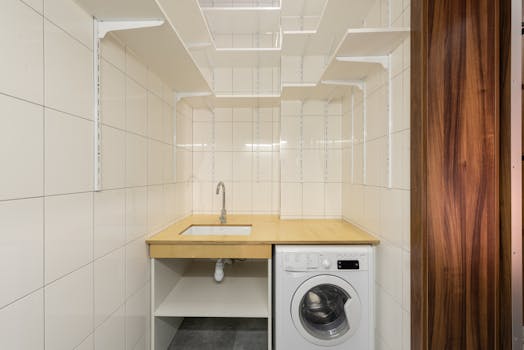
Maximizing Laundry Room Space
Discover how to optimize your laundry room with minimalist organization methods and essential Amazon products.
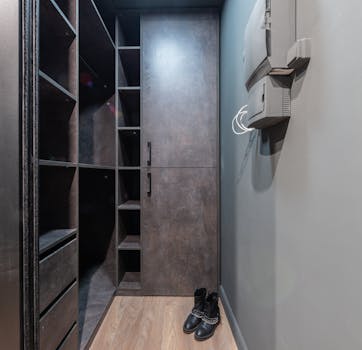
Minimalist Closet Organizer for Small Rooms
Transform your tiny closet into a serene oasis with these simple steps and smart storage solutions.